
Mike Grage, Customer and Technical Support at The Bonneville Shop and British Iron.
As any seasoned rider knows the easiest modifications a person can make to their motorcycle to increase acceleration or top speed is changing the tooth count on your sprockets. They also wear out and have the potential to cause damage when they fail. So, in this blog I’m going to go over what to check and maintain. And how to get the most life out of your chain and sprockets.
Motorcycle CHAINS AND SPROCKETS
Damping/Shock Absorption
I get it, that is not what anybody expected to be the first part in this blog. A lot of people, including professional technicians tend to overlook these parts. Without some form of shock absorption, the chain and sprockets will wear out in a very short period of time. The rollers in the chain will be beating the sprocket teeth like they owe them money. On vintage Triumphs the clutch hub shock absorber rubbers do all the work. Vintage Nortons have the additional assistance of the rear cush drive rubbers.
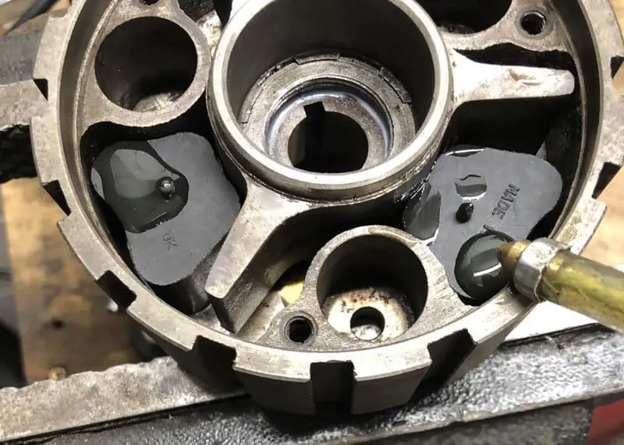
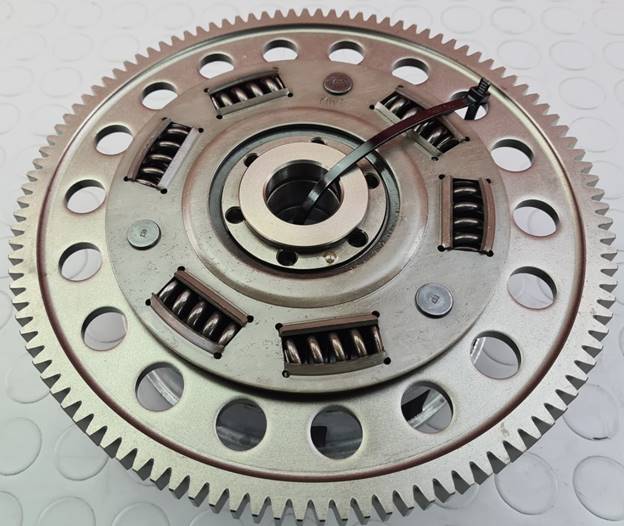
Nobody enjoys the pain of changing out their clutch rubbers, and I’m sure that is the reason why the engineers who designed the Hinckley Triumph models put damping springs on the clutch baskets and used rubber dampers rear sprockets. If your chain last less than 10,000 miles, check your clutch dampers and rear sprocket dampers. Chances are they are hard as a rock or went bad in another way. The natural shock absorption in a primary drive belt will also help extend the life of the final drive chain.


Chains
Motorcycle chain sizing is determined by the distance between the pins and distance between the inside plates, not the overall width. This is why o-ring and x-ring chains have a tendency to be wide enough to rub the cases of vintage Triumph, BSA, Norton and some other makes.
Chains come in a variety of sizes (ex: 530, 525, 520, 420, 415 etc.) and they must be fitted with the sprockets. The first digit the pitch, or distance between the pins measure in an 1/8 inch. 5xx is 5/8” between the pins, and 4xx is 4/8 or 1/2″ inch between the pins.
The second and third number is the distance between plates, originally in 1/8’s of an inch (x30 is 3/8”, x20 is 1/4”, x25 is 5/16”). People good with math will notice the missing decimal point for the width, the 525 chain is 2.5/8 or 5/16 wide. I have no idea who came up with that sizing system, but I know a few people who would like to talk to him about the missing decimal point. Especially the Japanese bike techs that occasionally deal with 428 chains, which are 2.8/8 or .35” between the plates.
The majority of vintage motorcycles that The Bonneville Shop supplies parts for use 530 chains, which is the standard size for just about all of the vintage British twins and triples. Some single cylinder bikes like the 1966 Triumph T20 Cub lists 1/2” x 3/16” for the rear chain, that translates to a 415 chain. The 1971 Triumph T25 lists 5/8” x 1/4″ which is a 520 chain.
The chain needs to be kept clean, lubricated, and properly adjusted. Breaking a chain can be devastating. A broken chain can cause injuries, property damage, and put big holes in engine cases.
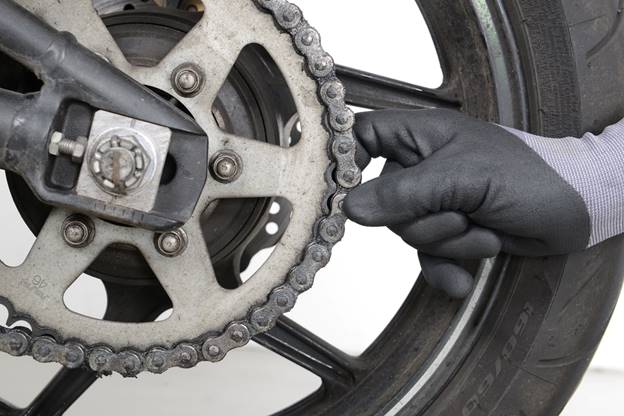
One of the easiest ways to tell if your chain is worn out is to see if you can lift one of the rollers off of the very back of the rear sprocket, if you can see light between the sprocket/chain it is worn out. You should also check for axial (left/right) play in the chain. There should be a small amount of axial play in any chain, if the chain can twist or contact the tire it is dangerous and needs to be replaced. An o-ring or x-ring chain will feel spongy, traditional chains will not. All of the links should move smoothly, the chain should be replaced if there are any stiff or tight links.

Sprockets
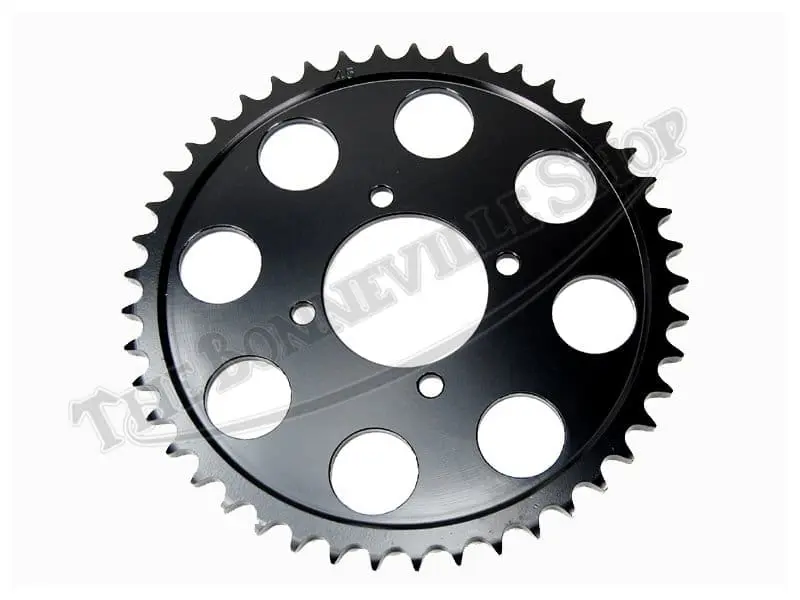
Sprockets determine the final drive ratio, changing the tooth count can increase or decrease this ratio. A higher ratio will increase acceleration and lower fuel mileage. A lower ratio will increase top speed and fuel mileage. Needless to say, sprockets must match the chain. The teeth on a 530 sprocket will never fit inside a 415 chain.
Changing the tooth count on the gearbox sprocket will make a bigger difference than making those same changes to the rear sprocket. To calculate the final drive ratio, you divide the rear sprocket tooth count by the gearbox sprocket tooth count. The 79 T140E parts manual list 20T gearbox sprocket and 47T rear as standard, that provides for 2.35 final drive ratio. Same parts book has two more option for gearbox sprockets, 19T (2.47 w/47T) and a 18T (2.61 w/47T) option. There is also a 45T rear sprocket option that will give you a 2.25 ratio with a 20T gearbox sprocket.
Lowering the final drive ratio for the highest top speed sounds like it can be fun, but there are some serious downsides to doing so. Going too low increases the stress on the entire drivetrain. This will increase your potential to cause detonation from lugging the motor. Make the primary chain and clutch work harder. And increases the pressure on the dog/slots in the transmission.
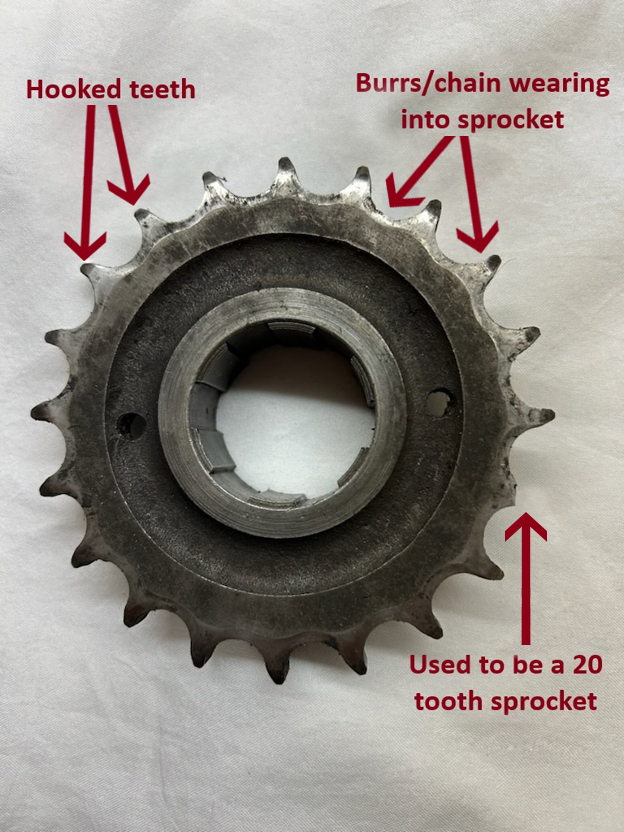
When a sprocket is worn out it begins to take the shape of a circular saw blade. They will also have some burrs build up around the teeth. If the teeth start taking a hook shape they can hang up on the chain, and this increases the risk of chain failure.



I hope this blog provides some insight into chains and sprocket, and provides the reader with some decent guidance. Please go inspect your chains and sprockets, we want you to keep your old bike on the road as long as possible. Next up for final drive blogs will be the Rocket III shafts and the belts on the 1600/1700cc Thunderbirds.