
By Mike Grage, Technical and Customer Support at The Bonneville Shop and British Iron.
Table of Contents
LED Troubleshooting – We didn’t have LEDs when I started professionally wrenching on motorcycles over 30 years ago, but I most certainly wish we did due to the low power requirements. Done right LED lighting can make riding a battery less bike at night much safer. People of all skill and knowledge levels tend to have difficulty making LED turn signal lights work on their motorcycles, this is usually due to an incandescent turn signal indicator light bulb. If you’ve had trouble making your 446 LED to work with a high/main beam warning light, keep reading and I’ll explain how to overcome this problem too.
Power Flow
When it comes to turn signal warning lights manufacturers like to take advantage of the fact that incandescent/traditional bulbs have no polarity. Below are two illustrations outlining the power flow of the turn signals and the indicator light on a positive ground Triumph motorcycle.
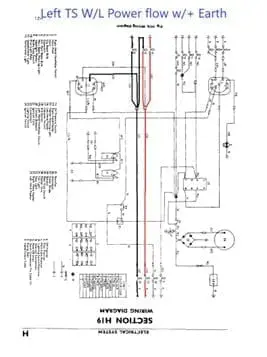
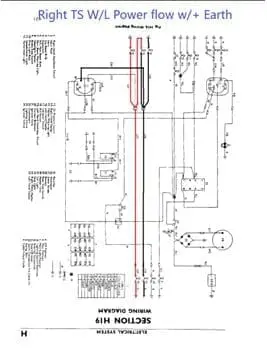
(The diagrams are upside down for a reason, looking at them like that when diagnosing lights keeps left/right and fore/aft in their proper positions. I turn them another way for charging and ignition diagnostics)
“The two main problems encountered after installing LED turn signal bulbs are a severe voltage drop and/or all 4 signals flashing at the same time.”
Potential Problems with LED Troubleshooting
The two main problems encountered after installing LED turn signal bulbs are a severe voltage drop and/or all 4 signals flashing at the same time. Since an incandescent indicator light bulb is simply a coil of wire in a glass bowl it is the path of least resistance to ground for all voltage not used by the LED lights and it allows back feeding of electricity. This causes a voltage drop and/or creates an out of control turn signal circuit.
Since a diode allows electricity to flow one way the most effective way to cure this current leak is with a pair of diodes. Connecting each turn signal wire to a diode, then wiring both diodes to one side of the indicator light and running an earth/ground wire to the other side will solve this problem. The diodes isolate the left circuit from the right keeping all electricity supplied to the indicator out of the opposing side.
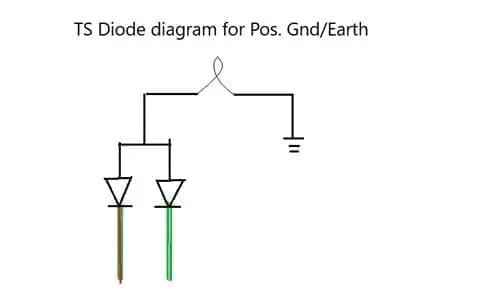
(Triangle points to diode’s direction of flow)
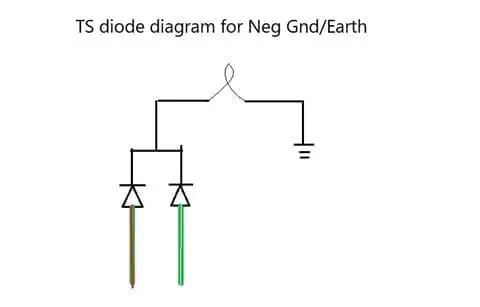
(Triangle points to diode’s direction of flow)
One thing to note here is that most motorcycles that came from the factory with LED turn signals have a similar diode arrangement is in the wiring harness, just like in the Hinckley made liquid cooled Bonneville.
LED Troubleshooting: Using LEDs with Traditional High Beam Indicator Lights
The 446 LED head lamp bulbs have a similar problem in bikes with a main or high beam indicator light. Since the incandescent indicator bulb is a coil of wire in a glass bowl that is constantly connected to ground/earth it will allow enough electricity through to power up the LEDs. The only way to stop this back feed is to install a diode or “light emitting diode”, also called a LED because they are both one-way valves for electricity.
Solution 1:
So, when changing to a LED headlight, it is a good idea to change to a LED high beam warning light bulb too. The BA7S LED we offer here at The Bonneville Shop are negative ground. To use them with positive ground you will need to swap the blue/white and red wires coming from the warning bulb socket to the harness.
Solution 2:
The second solution is to leave the bulb out of the high beam warning light.
Solution 3:
A third solution is to use a single diode to prevent this back feeding. On a positive ground/earth system the Lucas 83225A/Triumph 60-7082 can be attached to the high beam warning light’s ground/earth spade connector, then the ground/earth wire attaches to the diode’s male spade connector.
____________________________________________________
LED Turn Signal and Indicator Light FAQs
Why do all four of my LED turn signals flash at the same time?
All four signals usually flash at once because the original incandescent turn signal indicator bulb is back-feeding current into the opposite side of the circuit. An incandescent bulb has no polarity. It’s just a coil of wire in a glass bulb, so after you fit LED bulbs, it becomes the easiest path to ground for any voltage the LEDs don’t use. That lets current cross from the left circuit to the right, so the front and rear signals on both sides light together.
Why do my LED turn signals have a voltage drop or flash erratically?
The same incandescent indicator bulb that causes all four signals to flash can also cause a severe voltage drop. LED turn signals draw very little current, so the voltage they don’t use leaks through the low-resistance indicator bulb filament to ground. The result is dim, erratic, or uncontrolled flashing. Fixing the indicator circuit usually solves it. Mike Grage explains the power flow in the LED Troubleshooting article.
How do I fix LED turn signals on a classic Triumph with a single indicator light?
Fit a pair of diodes between the turn signal circuits and the indicator light. Connect the left turn signal wire to one diode and the right turn signal wire to the other. Wire both diodes to one side of the indicator light, then run a ground (earth) wire to the other side of the indicator. Each diode lets current flow only one way, so the left and right circuits stay separate and the indicator still lights for either side.
What does a diode do in a motorcycle turn signal circuit?
A diode works like a one-way valve for electricity: current passes in one direction and is blocked in the other. SparkFun’s diode tutorial gives a good general explanation. In a turn signal circuit, diodes isolate the left and right sides. Power from one side can reach the indicator light but can’t feed back into the other side. On a wiring diagram, the triangle in the diode symbol points in the direction of current flow.
Do modern motorcycles with factory LED turn signals use diodes?
Yes. Most motorcycles that came from the factory with LED turn signals have a similar diode arrangement built into the wiring harness. The Hinckley-built liquid-cooled Triumph Bonneville is one example. Older Triumph, BSA, and Norton models were designed around incandescent bulbs, so they usually need diodes added when you convert to LED signals.
Why does my LED headlight stay on in low beam or glow when it should be off?
On bikes with a main (high) beam indicator light, the incandescent warning bulb is always connected to ground. It can pass enough current to power up an LED headlamp bulb such as the 446 LED headlight bulb. This back-feed can confuse the high beam and low beam circuits. You stop it by placing a diode, or an LED warning bulb, in the indicator circuit.
Should I change my high beam warning bulb when installing an LED headlight?
Yes, it’s a good idea. Replacing the incandescent high beam warning bulb with an LED, such as the 281/BA7S LED warning light bulb, stops back-feeding because an LED is itself a diode. An LED only lets current flow one way, so it can’t feed power back into the headlight circuit. For more detail, see Has the 446 LED Main/Dip Beam Tripped You Up?
Will a BA7S LED warning bulb work on a positive ground Triumph, BSA or Norton?
Yes, but you have to reverse the wiring. The BA7S LED warning bulbs from The Bonneville Shop are negative ground. LEDs are polarity-sensitive and only work when current flows in the correct direction, as SparkFun’s LED guide explains. To use one on a positive ground bike, swap the blue/white and red wires that run from the warning bulb socket to the harness. If your warning light bulb holder is worn or damaged, replace it before rewiring.
Can I just remove the high beam indicator bulb to fix my LED headlight problem?
Yes. Leaving the bulb out of the high beam warning light stops the back-feed, because the empty socket gives current nowhere to flow. It’s the simplest fix, but you lose the dashboard reminder that your high beam is on. Fitting an LED warning bulb or a diode keeps the indicator working.
Which diode can I use to stop high beam indicator back-feeding on a positive ground bike?
On a positive ground system, you can use a Lucas 83225A diode, also listed as Triumph part number 60-7082. Attach it to the ground (earth) spade connector on the high beam warning light, then connect the ground wire to the diode’s male spade connector. This blocks back-feeding while keeping the original incandescent warning bulb. Most riders find a correctly wired LED warning bulb simpler. Browse Classic Triumph Electrical for related lighting and switch parts.
Are LED bulbs a good upgrade for a battery-less or low-output classic British motorcycle?
Yes. LEDs draw much less power than incandescent bulbs, which helps on battery-less bikes and on machines with limited charging output. Done correctly, LED lighting can make night riding on a battery-less motorcycle much safer. Plan for the indicator and warning light circuits when you upgrade so you avoid back-feeding. If you’re also upgrading the charging system, read Converting Your 6-Volt British Motorcycle to 12 Volts and browse Complete Electrical products.
Why are the wiring diagrams in the LED troubleshooting article upside down?
They’re drawn upside down on purpose. When you diagnose lighting problems, that orientation keeps left and right, and front and rear, in the same positions they occupy on the motorcycle. The article’s author, Mike Grage, turns diagrams a different way for charging and ignition work. For testing your circuits, see The Bonneville Shop’s electrical tools.