
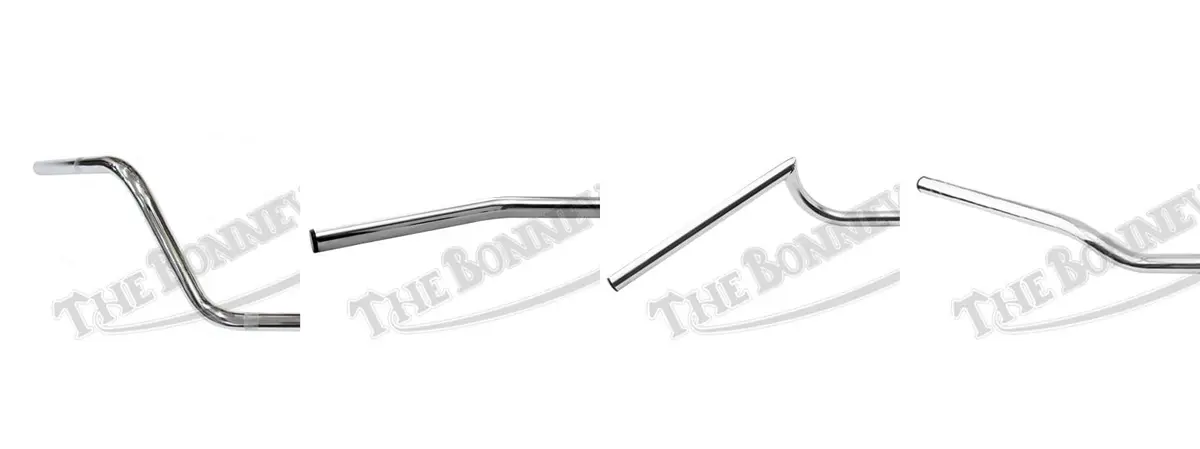
Considerations for Handlebar Changes
Most people in the motorcycle world want to make their bike their own by customizing it to their liking and riding comfort. One of the most common ways of doing this is to change the handlebars to fit their style or to make the bike more comfortable on highway. While the process sounds easy, there are a few things that complicate matters.
Minor changes to the pull-back, rise, and width can be done with changing cable and wire harness routing. But if you want to put some ape-hangers, clip-ons, or drag bars on your motorcycle; the difficulty and price depend on the year. For Triumph motorcycles manufactured in 1968 and earlier you only had to change the length of the front brake, clutch, and throttle cables. For 1969-1972 you must account for the front brake light switch that is made into the cable. Anything produced 1971 and later you will have to adjust the length of the wires for the handlebar switchgear along with the cables and brake hoses if it is a disc brake model.
The first thing to consider are interferences. The last thing anybody wants is for the new handlebars to dent the tank or scratch any paint. One example is if you are planning changing your T140/TR7 from the standard US Model high handlebar for 1971-1982 to drag bars, plan on replacing your p-clamps with some aftermarket risers intended for other makes to keep them from hitting the fuel tank.
cables
The next thing to check is the length of the cables. The best way that I’ve found to take measurements for cables is to use some 1/4” or 3/8” twisted yellow polypropylene rope. The rope is thick enough and stiff enough to act like control cable housing. Wrap some tape around the end of the rope, cut it in the middle of the tape to prevent fraying. Then stick that end in the cable adjuster or throttle housing on the handlebars.
Route the rope the same way you would the cable, making sure the turns aren’t too tight. The other end of the rope should be cut the same way as the other end and placed into where the cable housing will end. Once that is done you can remove the rope and place it on a tape measure to get an accurate length of the cable housing. If a shorter or longer cable is needed, my co-worker Dave Porter wrote an excellent blog on how to create a custom length cable.
Brake Hoses
Other considerations for handlebar changes are brakes hoses. The same method of measuring cables can be used for hydraulic brake hoses. The exception is using 1/2” rope of the same stiffness and caliber, and it routes like brake hose. Be sure to take into account that measuring for a custom length hose you will need to subtract for the fittings, Goodridge hose and fittings will require you to subtract 3.5 inches from your measurement for the hose length.
Wires
After determining cable and hose length, the wires may need to be changed. Wire extension can be made and may be more suitable for your application than chopping up the stock wiring harness. The Bonneville Shop has new plastic multi-pin connectors that can be used to make wire extensions for the later model switchgear. And the bullet connector tool kit if you prefer that look.
While changing handlebars is common, one of the oldest sayings in the motorcycle industry is that stock is worth more. The one area of the bike where this holds true more than anywhere else is in the handlebars. Manufacturers only provide cables, brake hoses, and wiring harnesses for stock handlebar dimensions. That makes replacing those parts as easy as it can get and that adds a bit of value to buyers of used motorcycles.


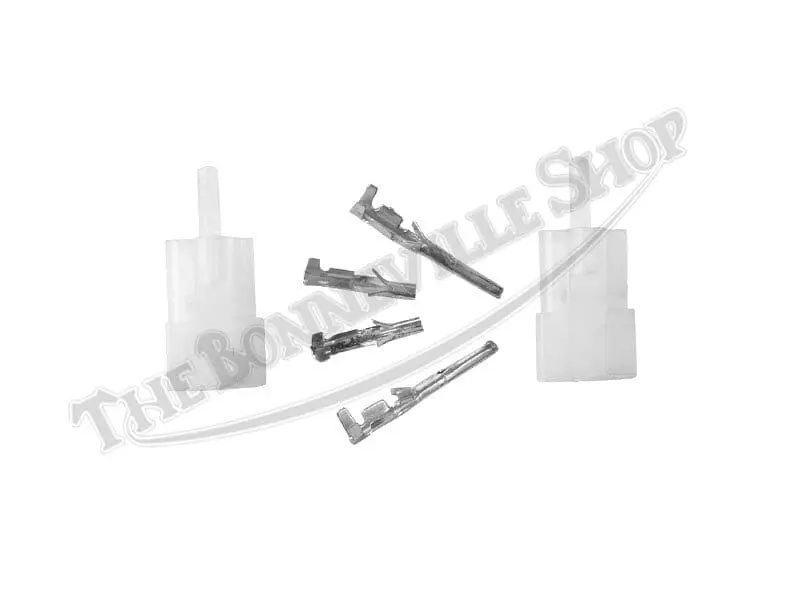
Triumph T140 Bonneville Tiger Lucas 2 Pin Multi-Pin Connector(s) PN# TBS-0310
$9.26 – $13.20Price range: $9.26 through $13.20
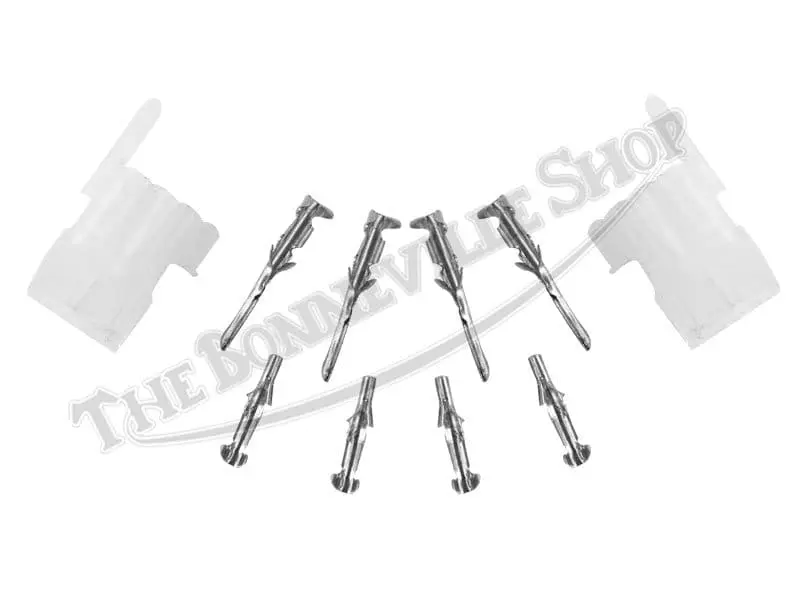
Triumph T140 Bonneville Tiger Lucas 4 Pin Multi-Pin Connector(s) PN# TBS-0320
$12.47 – $19.54Price range: $12.47 through $19.54

Triumph T140 Bonneville Tiger Lucas-Type 6 Pin Multi-Pin Connector(s) PN# TBS-0333
$13.30 – $21.10Price range: $13.30 through $21.10