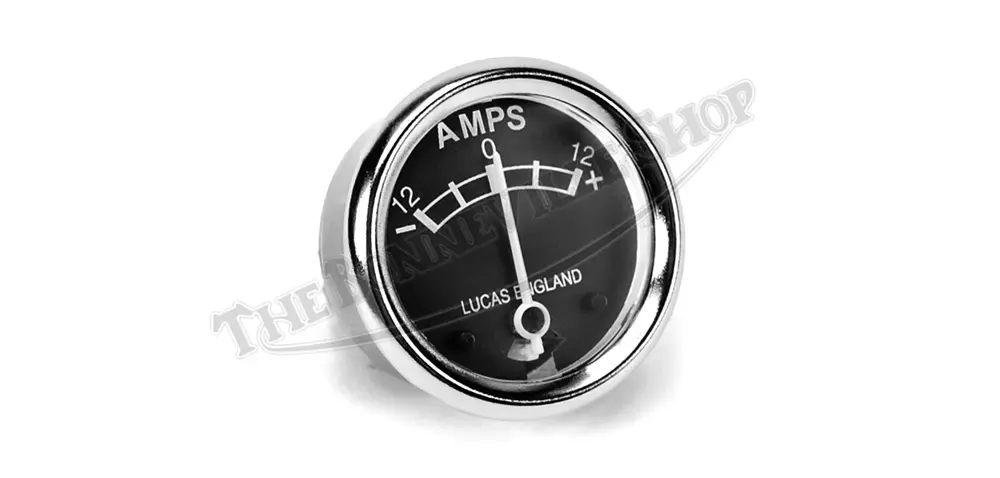
early 2AR Lucas 36403 ammeters
Lucas supplied the 2AR ammeter for use in Triumph 650 motorcycles from 1962 through 1970, specified for both the 6 and 12 volt charging systems. The early unit-construction coil ignition models were specified with the Lucas 36296 or 36084 ammeter to suit the 8 amp alternators, while the change to the 36403 ammeter occurred during the 1968 model year production when the stator output was uprated to 10 amps.
The earlier 2AR Lucas 36403 ammeters were somewhat prone to poor engagement in the opening of the headlamp shell as the thin metal tabs were somewhat feeble and would work-harden after being repeatedly deflected back and forth in an effort to tighten the bezel. Eventually the tabs would break off and no longer hold the ammeter in place.
1968-Onwards Lucas 36403 Ammeters
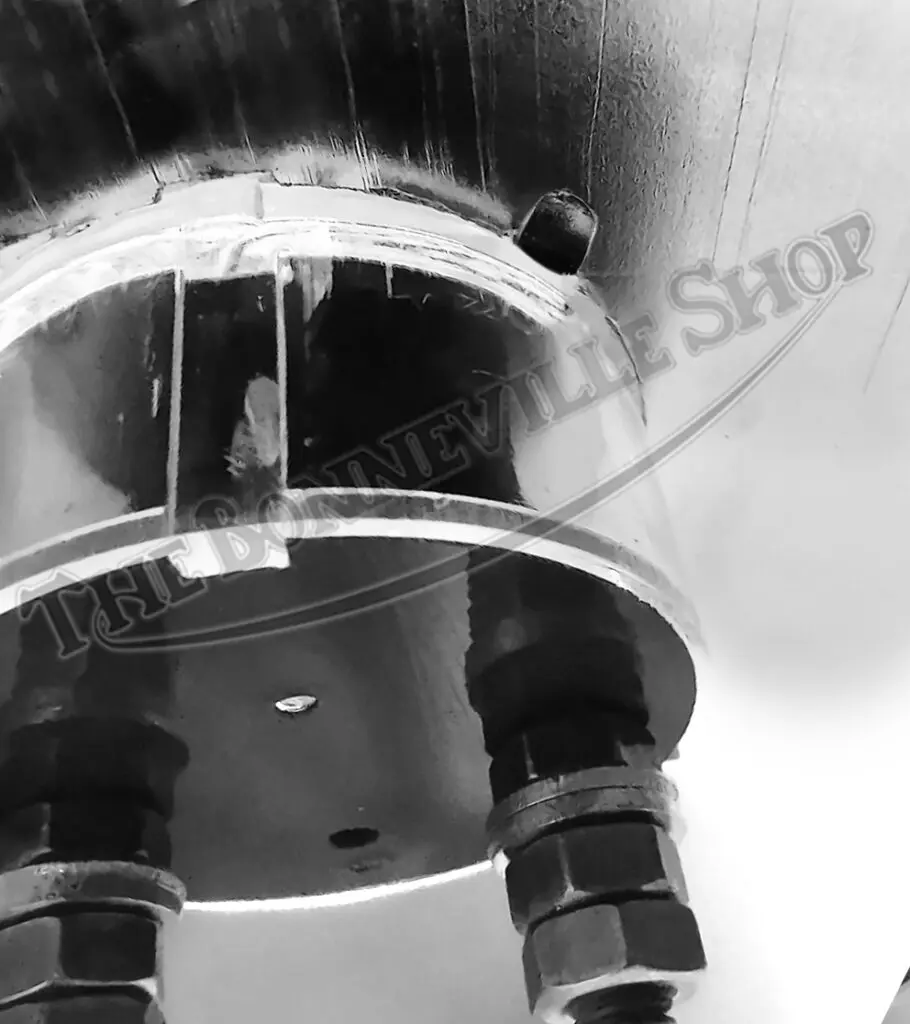
The later Lucas 2AR ammeters, specified for use from 1968-on, were introduced ahead of the change to the 2-wire 10 amp RM21 alternator for the 1969 model year. They are identified by the 12-0-12 amperes scale on a black face. They are dimensionally the same as the earlier 8-0-8 scale ammeters, but an improved mounting system was incorporated into the body and bezel arrangement that allowed for a “cam-lock” retaining system that allowed for a more positive fitment into the headlamp shell.
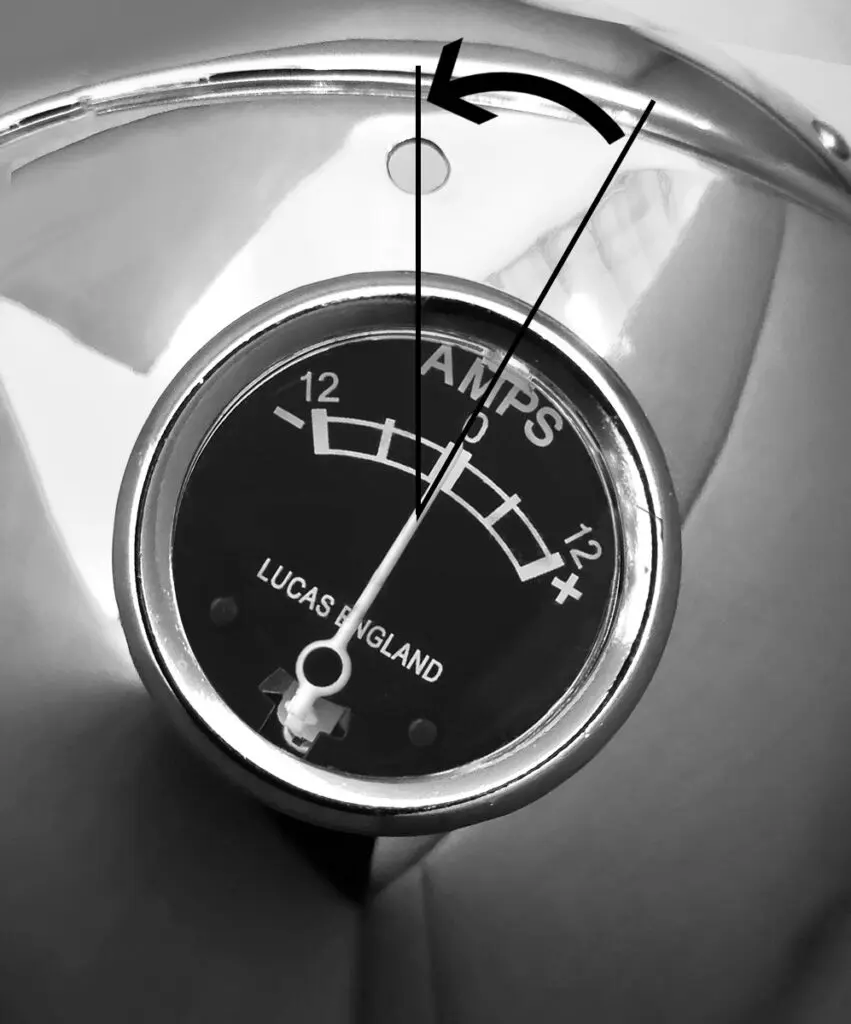
Today’s reproduction 2AR Lucas 36403 ammeters are produced with the cam-effect body and bezel that allows for improved engagement of the retaining tangs. The cam-effect retaining system is defined by a recess around the clear body under the chrome bezel. Once the ammeter is inserted into the aperture in the headlamp shell, the face will be seen as being off-centered.
You can then rotate the body anti-clockwise, allowing the cam-effect to draw down the bezel, locking it into place. Once satisfied with the placement of the ammeter, the four tabs can then be lifted upwards from within the shell, retaining its position. Thanks for reading this blog and good luck with the installation.